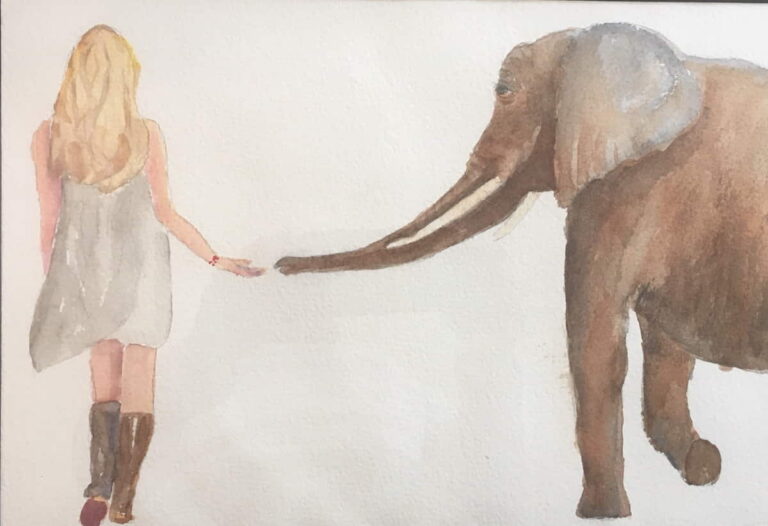


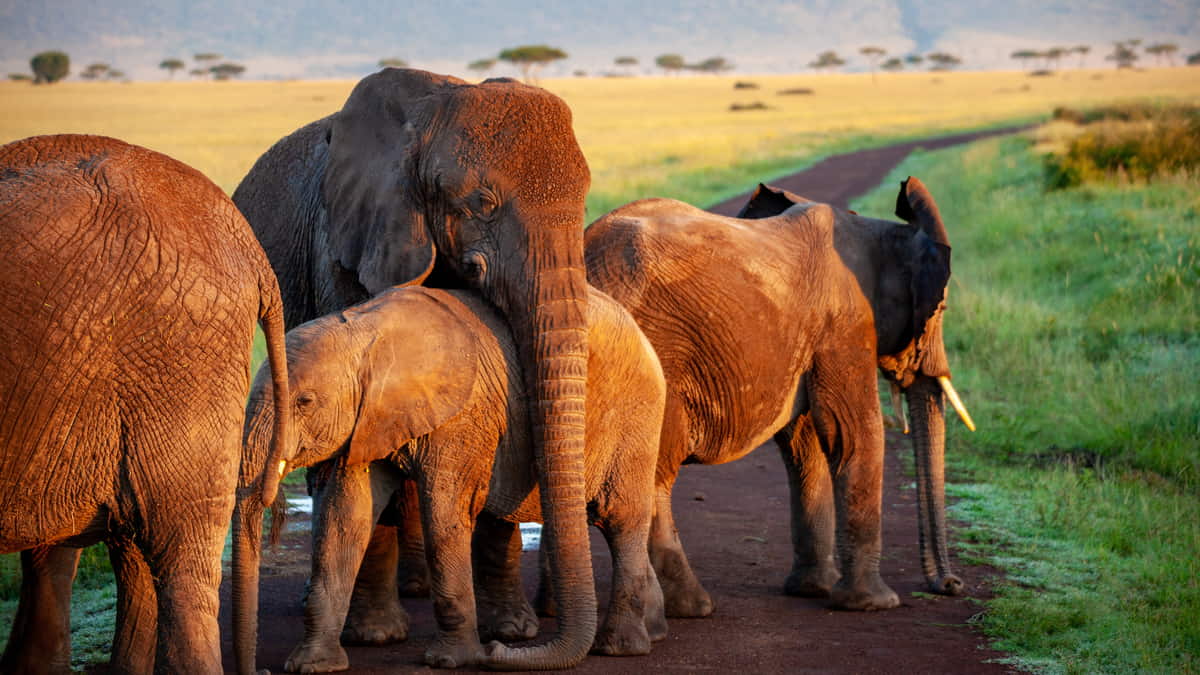
Humans are masters at storytelling. History was once passed down through stories. It is what shaped us, our culture, and made us who we are. Telling elephant stories is no different. I feel certain that if they could tell them to you themselves, they would. When I heard my very first elephant story about an individual named Eleanor, my entire world changed. I looked over the fields of the farm behind our house in Oregon and pretended it was an African savanna. If the sun bent in just the right way, I could sometimes see Eleanor emerge through the tall grass.
Eleanor’s Story
Poachers killed her mother for the thing all elephants are killed for—her tusks. Eleanor was just a baby, rescued by the Governor and his wife, her namesake, Lady Eleanor. Soon she grew too big for their garden, so the family transferred her to a local zoo. Unable to walk more than a few paces or move, she grew fat, listless, and lethargic. It was there that conservationists and game wardens Bill Woodley and David Sheldrick rescued her for the second time.
They secured her release, and soon she found herself among the most capable hands in Kenya, with Daphne Sheldrick. The changes in Eleanor’s demeanor were immediate. An older elephant named Samson, also raised by the couple, took the younger elephant under his guidance. With no fences and no more cages, the savanna was theirs to learn and explore.
Soon more elephants came. Younger and younger. Eleanor watched Daphne care for each one and before long, joined her. Side-by-side, the two saved hundreds of orphans that would have no chance—no hope whatsoever—had fate not intervened.
Thirty-three years later, long after David died of a heart attack and Daphne had created The David Sheldrick Wildlife Trust in his honor, long after scores of baby elephants they rescued joined the wild herds of Kenya—Eleanor finally left. There she had three wild babies of her own and remained free of all human contact ever since, except for a few visits over the years to introduce Daphne to her newest baby.
What Elephants Taught Me
Eleanor’s story changed me; it changed the way I looked at and thought about elephants. It made me want to learn more about them. And as scientists lifted the veil of secrecy surrounding their behavior, I found myself overwhelmed by the complexity and depth of their lives.
They were more like us than I ever could have imagined.
And we were killing them one by one, herd by herd, for nothing more than the insatiable consumption of their canine teeth—ivory.
It was then that I decided I may not be able to physically save an elephant, but I can certainly tell you their stories. I can share the hope, the triumph, the deep emotional bonds…many of which seem deeper than our own. I can tell you what’s working and what isn’t. I know their tragedies, their sorrow, and most of all, their mystery.
Imenti and Edo: Two Powerful Elephant Stories
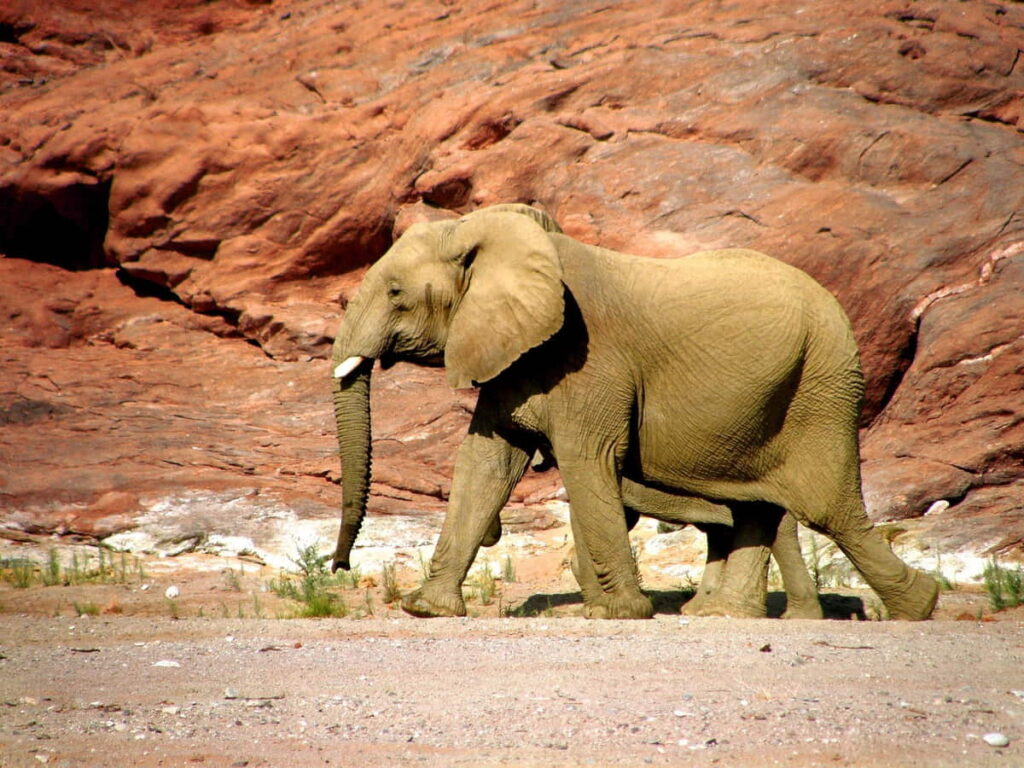
For years, scientists studied a group of wild elephants known to walk nearly a hundred miles across the vast Sahara Desert. Never before had scientists observed elephants walking that far in such a short amount of time. Yet, Imenti—another young rescue brought back to life by Daphne and Eleanor—walked that far in a day. Then he did it again the next. Desperate to return to his family, he also crossed a vast desert, two rivers, and several villages, putting his life in more danger with every step. “Imenti’s Long Walk Home” tells the story of his incredible trek, which made him one of the most famous elephants in Kenyan history.
Upon his rescue, the keepers discovered Edo was terrified of the color red and of a resident sheep in the orphanage. During chilly mornings, keepers placed blankets over the backs of young orphans, but because many were woven with red, Edo refused. Not long after this, scientists in Kenya discovered that elephants recognized the voices of men versus women and children. They could distinguish between people who killed elephants and those who did not. They also recognized different ethnic groups as well as the different colors worn by each one. The Maasai tribe, known for wearing red and for herding sheep, live in Amboseli where Edo was rescued.
It offered another startling clue. Today, when young orphans arrive fearing the color red or sheep, we understand why. We know what part of the country they come from, and these small details help tell another chapter.
Science Needs Storytellers Too
Scientific discoveries are vital to saving any species. But so are knowing and telling their stories. When combined, I think there are few things more powerful, and that is why I write books the way that I do. I wanted to share the life histories I learned about every elephant I studied, but also tie in the science. It’s why I became a scientist: to understand both.
In my books, I bring these two worlds together. If Eleanor’s thirty-three-year friendship with Daphne captured your imagination, you’ll find their full story in The Will of Heaven. And if you’d like to follow Imenti’s extraordinary journey, you’ll discover it in Elephant Mountain. Their stories remind me that every elephant has a life worth understanding—and each one is worth protecting.
About the Author
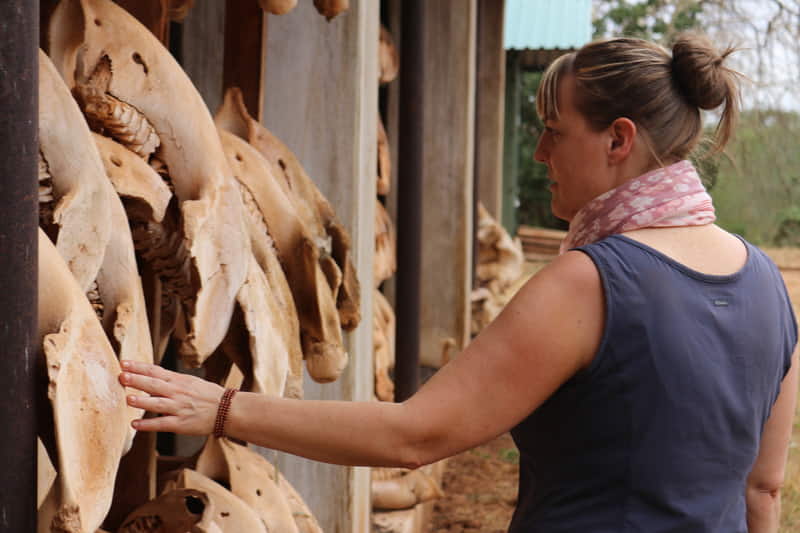
Debbie Ethell is an elephant scientist and educator. She is the author of The Will of Heaven, a book series exploring her life, her experiences with elephants, and the journey that shaped her work. Through her Teachers Pay Teachers store, Elephants in the Classroom, she creates elephant-based reading comprehension worksheets and curriculum that brings science to life for young students. Whether she’s writing books, developing educational resources, or sharing insight on her blog All Things Elephant, her goal is the same: to help people discover the remarkable lives of elephants through both story and science.