

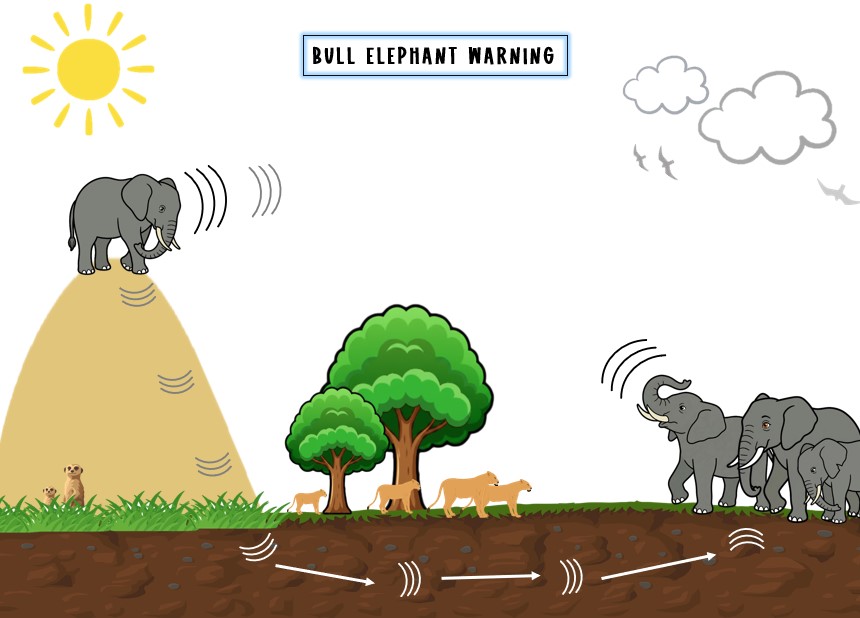
How do elephants communicate? The answer reveals a fascinating world where elephants can send messages to one another across many miles. Through the science of elephant infrasound and seismic communication, we are discovering a complex system of relationships, connections, and social bonds that we are only beginning to understand.
Why Education Matters to Me
As an elephant scientist, I have spent years studying remarkable individuals and sharing what I learned with students across the U.S. and Kenya. But my connection to education is also deeply personal.
When I was in the 5th grade, I struggled and quietly fell behind. Years later, when I returned to my education, I had to start over, learning 5th-grade math as an adult. Although I eventually earned my science degree, it took me years longer than it should have. Looking back, I wonder what might have changed if I discovered a topic that sparked my curiosity and imagination.
That is why I create elephant-based curriculum for 5th graders—the age when I first struggled in school. I want to help young students discover something that captures their attention and gives them a reason to persevere. My goal is to inspire the next generation of scientists and conservationists…even if they don’t know it yet.
The Long-Distance Language of Elephants
One of the most remarkable things I learned is how elephants communicate with each other across astonishing distances. Through infrasound and seismic communication, elephants share information across vast and unforgiving landscapes. Their low-frequency calls travel above ground for up to six miles, while vibrations transmitted through their feet move underground for nearly 20. However, wild elephant researchers believe their communication range extends far beyond what we can measure.
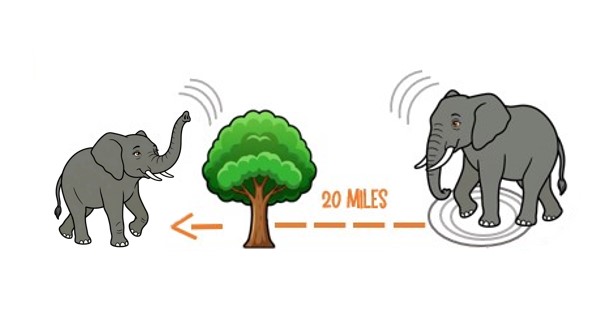
For students, discovering that elephants can “talk” to one another is an unforgettable way to connect reading with science. It transforms a simple comprehension lesson into an opportunity to explore elephant behavior on an epic scale.
Bringing Elephant Science Into the Classroom
Teachers are always looking for ways to strengthen literacy skills while capturing students’ attention. Elephant communication provides a unique opportunity to combine nonfiction reading with a topic that naturally sparks curiosity.
Students can explore facts on elephants while practicing essential comprehension skills, including identifying the main idea, finding supporting details, making inferences, and citing text evidence.
My Elephant Communication Reading Task Cards combine science and literacy through standards-focused comprehension reading worksheets that help 5th graders practice nonfiction reading skills. These reading comprehension activity sheets are designed to make nonfiction reading engaging, not just another worksheet. By learning how elephants communicate, students are not only developing reading skills—they are gaining a deeper understanding of animal behavior and the importance of conservation.
About the Author

Debbie Ethell is an elephant scientist, educator, and author. Through Elephants in the Classroom, she creates elephant-based curriculum that connects students with science. She is also the author of The Will of Heaven, a series of books exploring her life, her experiences with elephants, and the journey that shaped her work. She writes about elephant behavior, conservation, and classroom connections on her blog, All Things Elephant.